
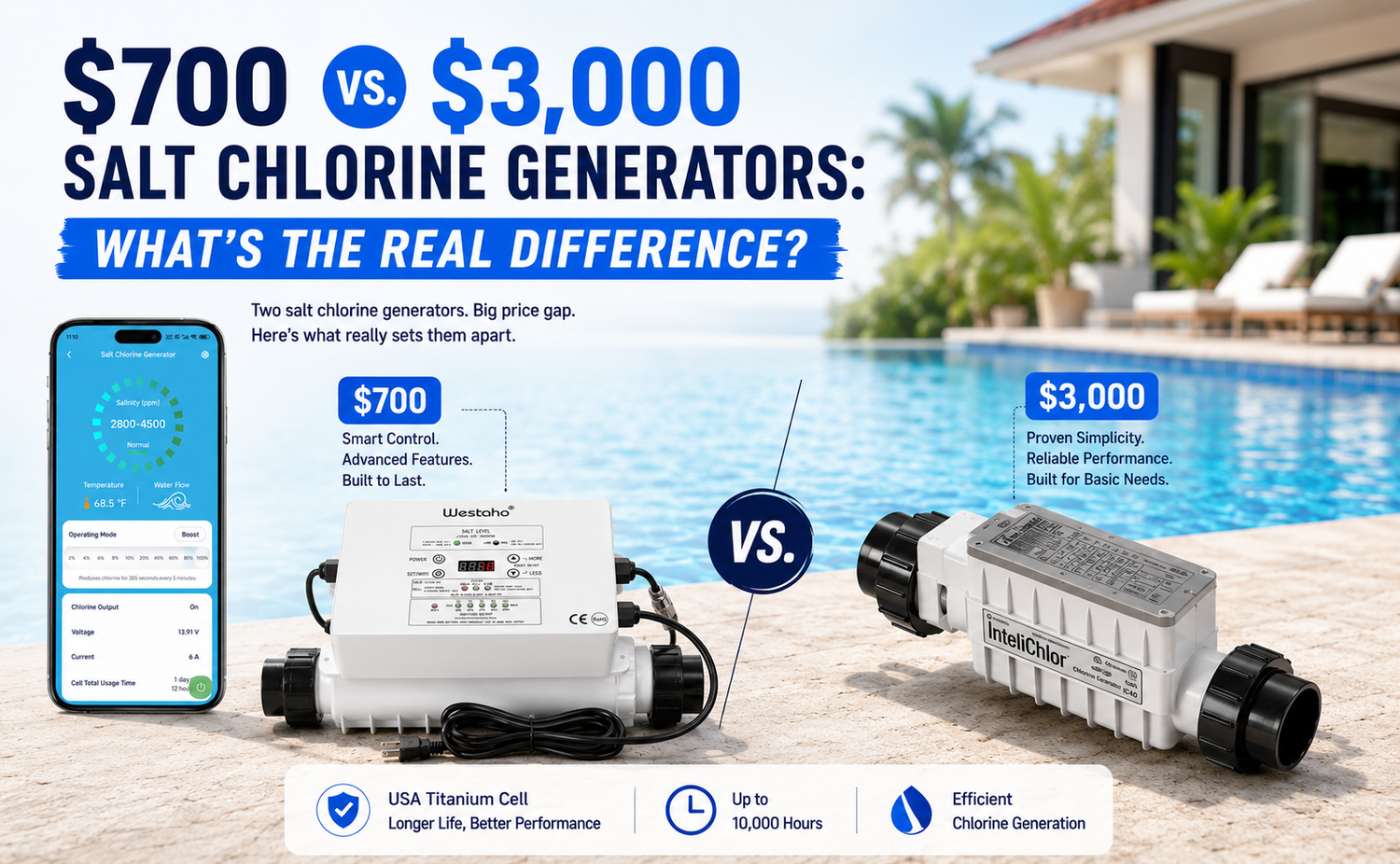
Why Smart Pool Owners Are Rethinking Expensive Saltwater Systems
When shopping for a salt chlorine generator in the United States, most homeowners quickly notice a confusing reality:
Some systems cost around $700, while others can easily reach $2,000 to $3,000 or even more.
At first glance, these products appear to do exactly the same thing:
Convert salt into chlorine and keep your pool water clean.
So why is there such a dramatic difference in price?
Is a $3,000 system actually three or four times better than a $700 system?
Or are pool owners paying for something else entirely?
The truth is more nuanced—and much more important for long-term ownership decisions.
In this guide, we will break down exactly what drives salt chlorine generator pricing, what you are actually paying for, and why modern systems like Westaho are reshaping the market with smarter, simpler, and more affordable solutions.
1. What a Salt Chlorine Generator Actually Does (No Matter the Price)
Before comparing brands or prices, it’s important to understand the core function of all salt chlorine generators.
Every system—whether it costs $700 or $3,000—operates on the same fundamental principle:
Salt + Electricity = Chlorine
The process is simple:
- Pool salt is dissolved into water
- Water passes through a titanium electrolytic cell
- A low electrical current converts salt into chlorine
- Chlorine sanitizes the pool water
- The system continuously repeats this cycle
That’s it.
There is no fundamentally “different chemistry” between expensive and affordable systems.
What changes is not the science—but the system design, capacity, branding, and distribution model.
2. The Real Reasons Some Systems Cost $3,000+
The jump from $700 to $3,000 is not primarily about better water quality.
Instead, it comes from structural and business model differences.
2.1 Oversized Capacity for Large Pools
Many premium systems are designed for:
- 40,000–60,000+ gallon pools
- Commercial or luxury residential installations
- Pools with waterfalls, spas, or multiple zones
These systems require:
- Larger titanium cells
- Higher electrical output
- Stronger power supplies
- More durable construction
However, most residential above-ground and standard inground pools are far smaller.
For many homeowners, this means they are paying for unused capacity.
2.2 Dealer Networks and Hidden Markups
Traditional pool equipment brands often use a multi-layer distribution system:
Manufacturer → Distributor → Regional Dealer → Pool Store → Customer
Each layer adds cost:
- Distributor margins
- Dealer commissions
- Retail markups
- Installation service fees
By the time the product reaches the homeowner, the price may have doubled or tripled compared to manufacturing cost.
This is one of the biggest hidden drivers of “premium pricing.”
2.3 Professional Installation Requirements
Many high-end systems are not designed for simple DIY installation.
They often require:
- Licensed electricians
- Plumbing modifications
- Integration with pool automation systems
- Dealer setup and calibration
Installation alone can cost $300 to $1,500+, depending on system complexity.
In some cases, installation cost becomes a significant portion of the total ownership expense.
2.4 Full Pool Automation Ecosystems
Premium brands like Pentair and Hayward often sell not just a chlorinator—but a full ecosystem.
These ecosystems may include:
- Smart pumps
- Heaters
- Lighting systems
- Central control panels
- Mobile app platforms
While powerful, this creates:
- Higher system complexity
- More components to install
- Higher upfront cost
- Greater maintenance dependency
Many homeowners do not need full automation—but still pay for it indirectly.
2.5 Brand Premium and Legacy Marketing
Well-established pool brands invest heavily in:
- Dealer networks
- Trade shows
- National advertising
- Sales representatives
- Retail partnerships
These costs are built into product pricing.
As a result, a portion of what consumers pay is for brand presence—not just hardware.
3. What You Are Actually Paying For (And What You Are Not)
When you buy a salt chlorine generator, you are paying for:
You ARE paying for:
- Chlorine generation capacity
- Titanium cell quality
- Control system design
- Installation model
- Smart features (if included)
You are NOT necessarily paying for:
- Better water quality
- Stronger sanitation performance
- More comfortable swimming experience
Because in reality:
Water quality depends more on proper sizing and maintenance than brand price.
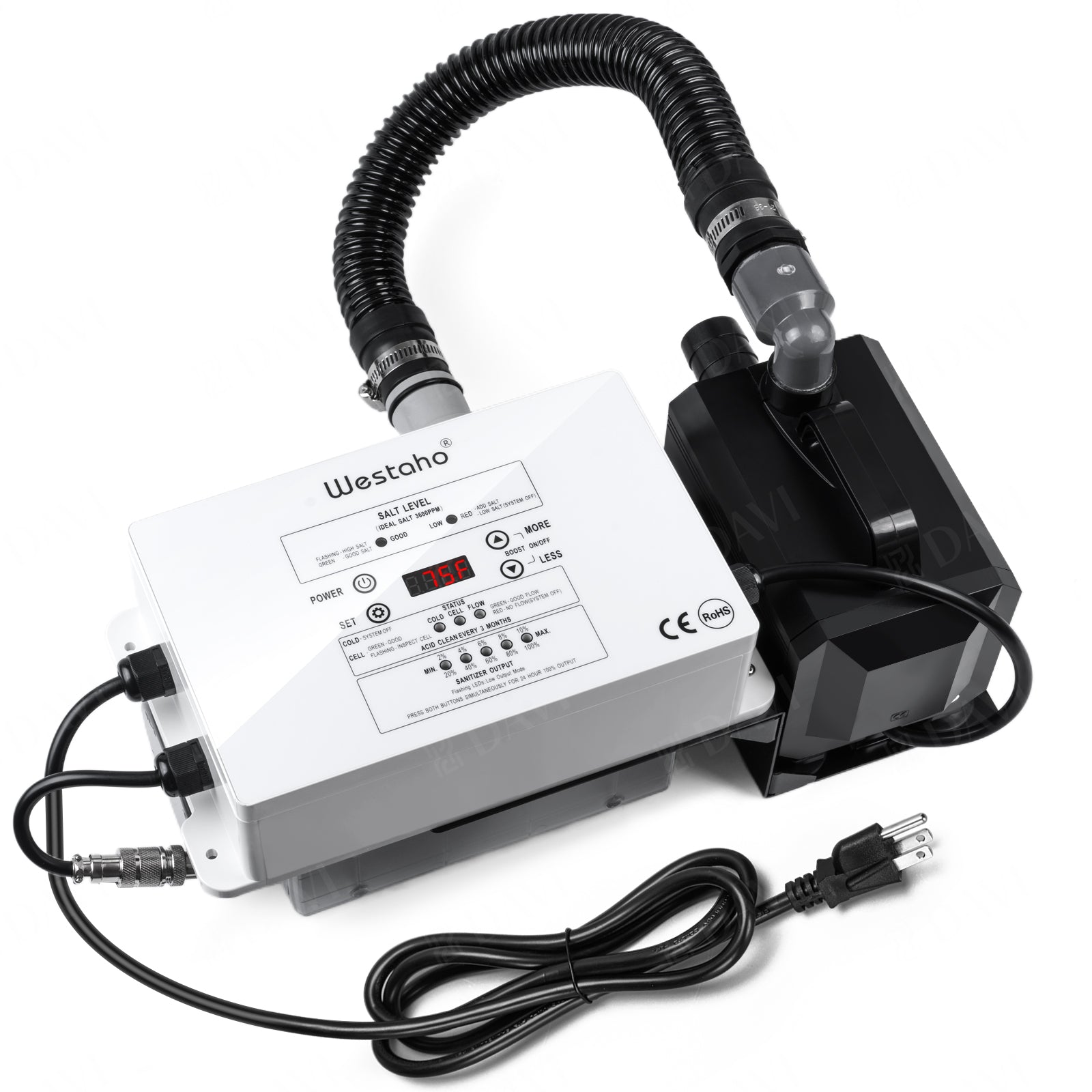
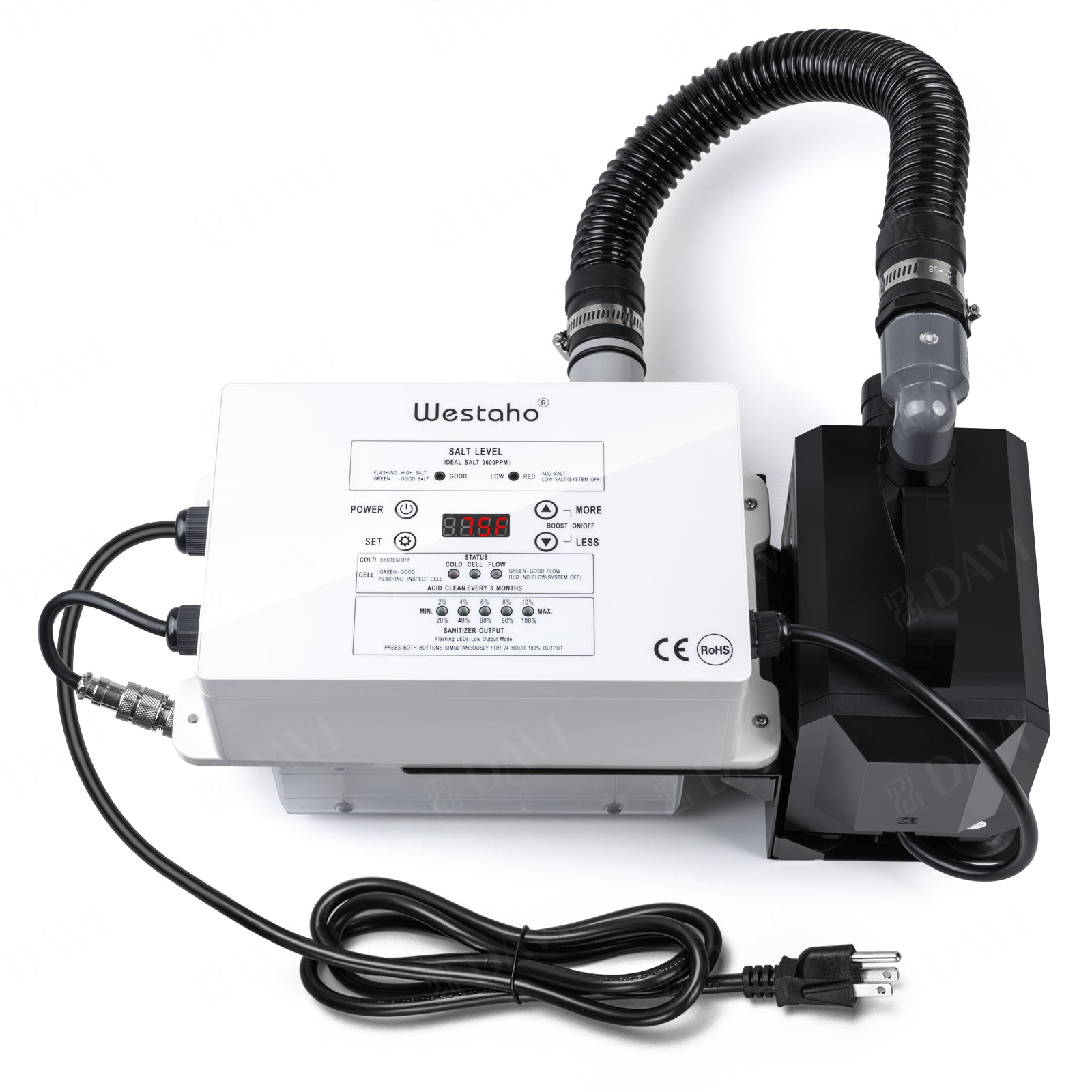
4. A Modern Alternative: Westaho Inground Salt Chlorine Generators
Westaho takes a different approach to pool care.
Instead of building oversized, dealer-dependent systems, Westaho focuses on:
- Residential-sized pools
- Simplified installation
- Integrated smart control
- Direct-to-consumer pricing
- Titanium cell efficiency
The result is a system designed specifically for real homeowners—not commercial installations.
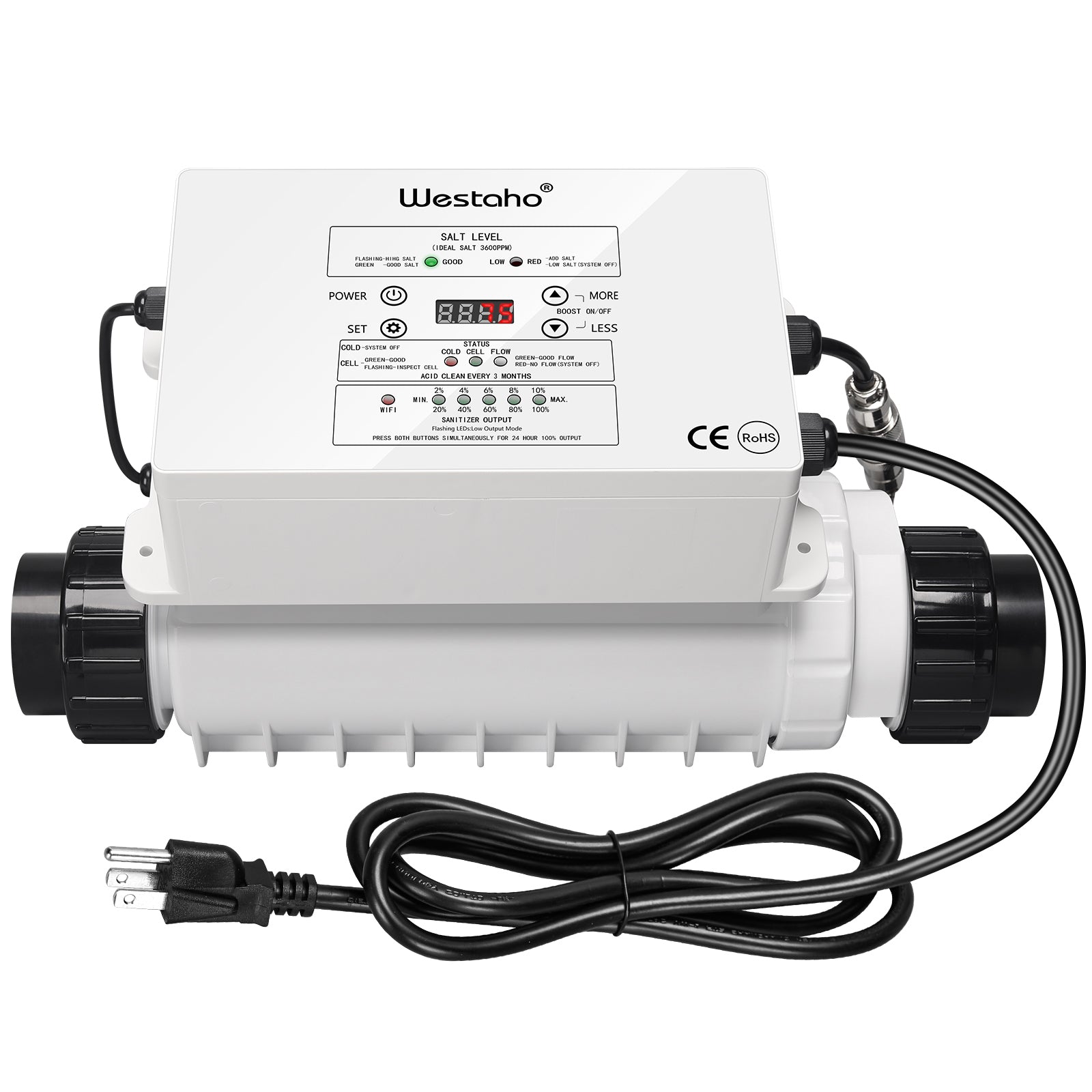
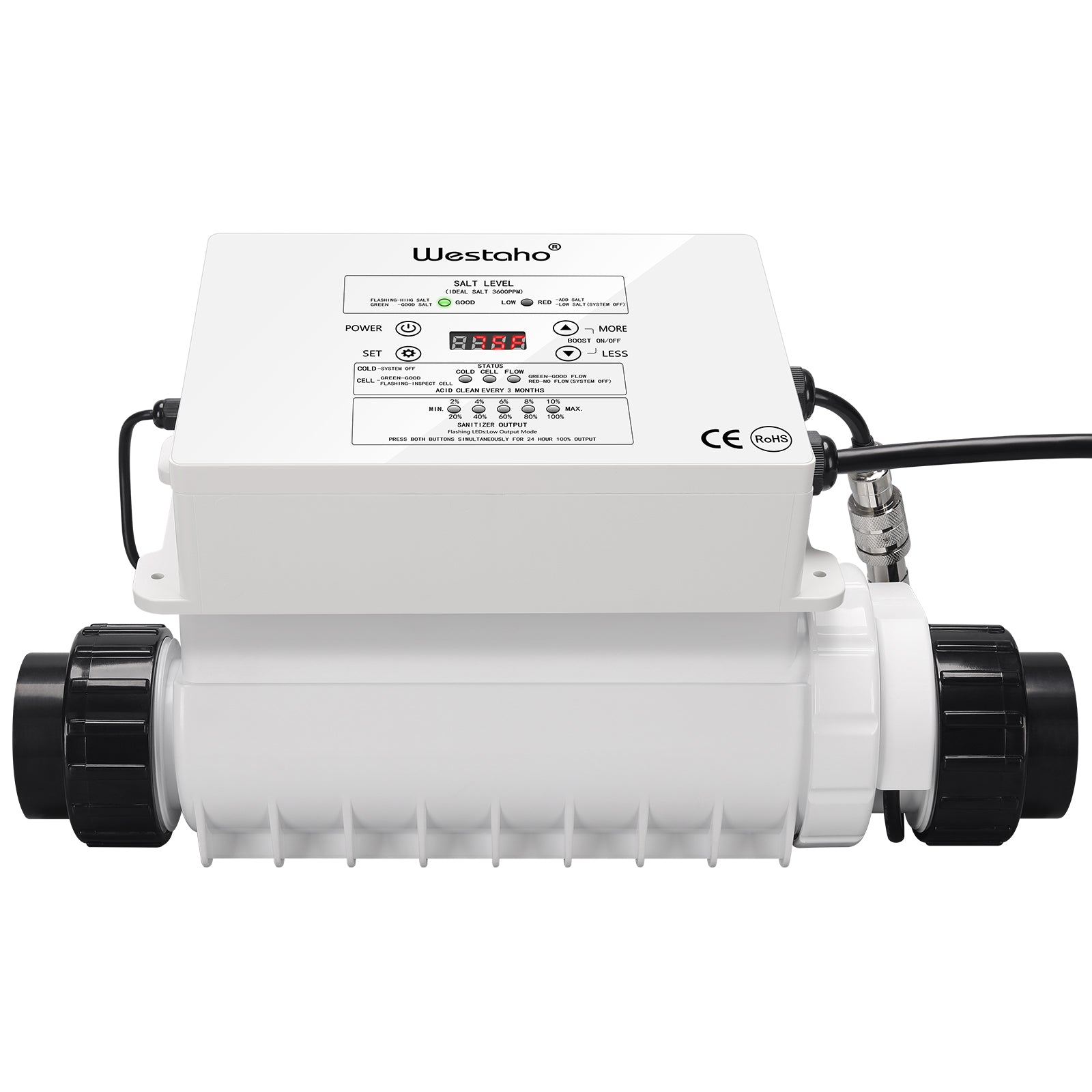
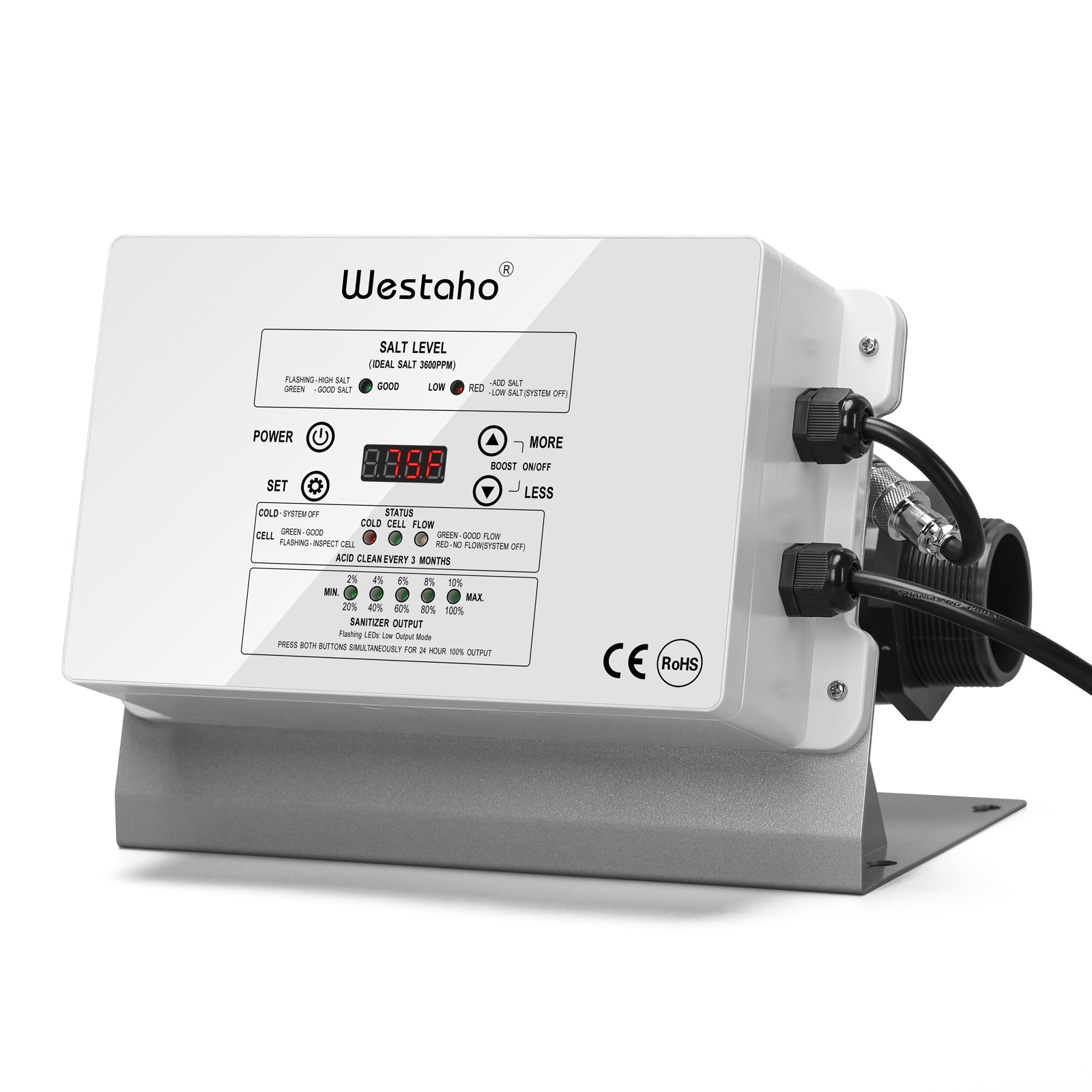
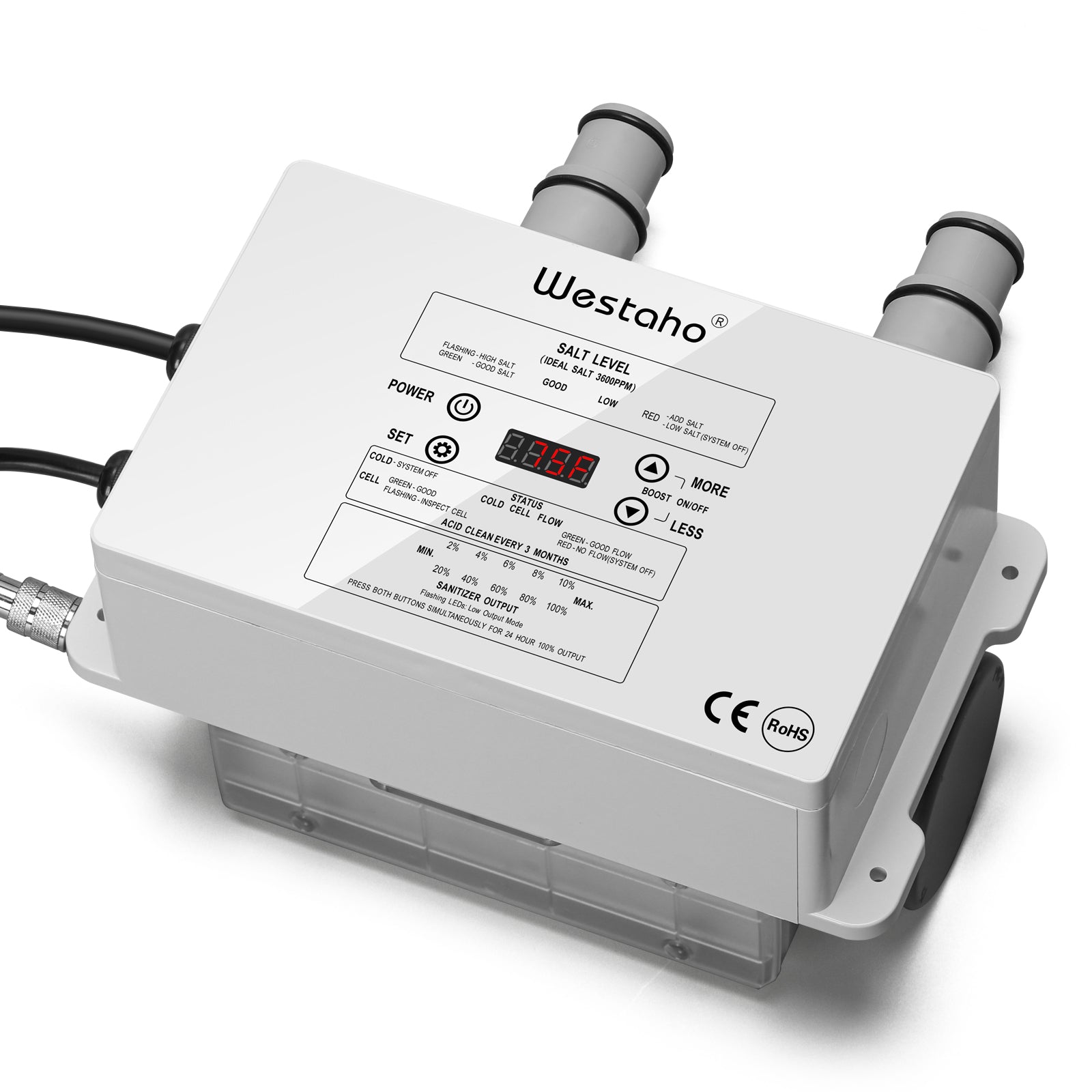
Westaho inground lineup includes three main categories:
5. Westaho Inground Product Line Explained
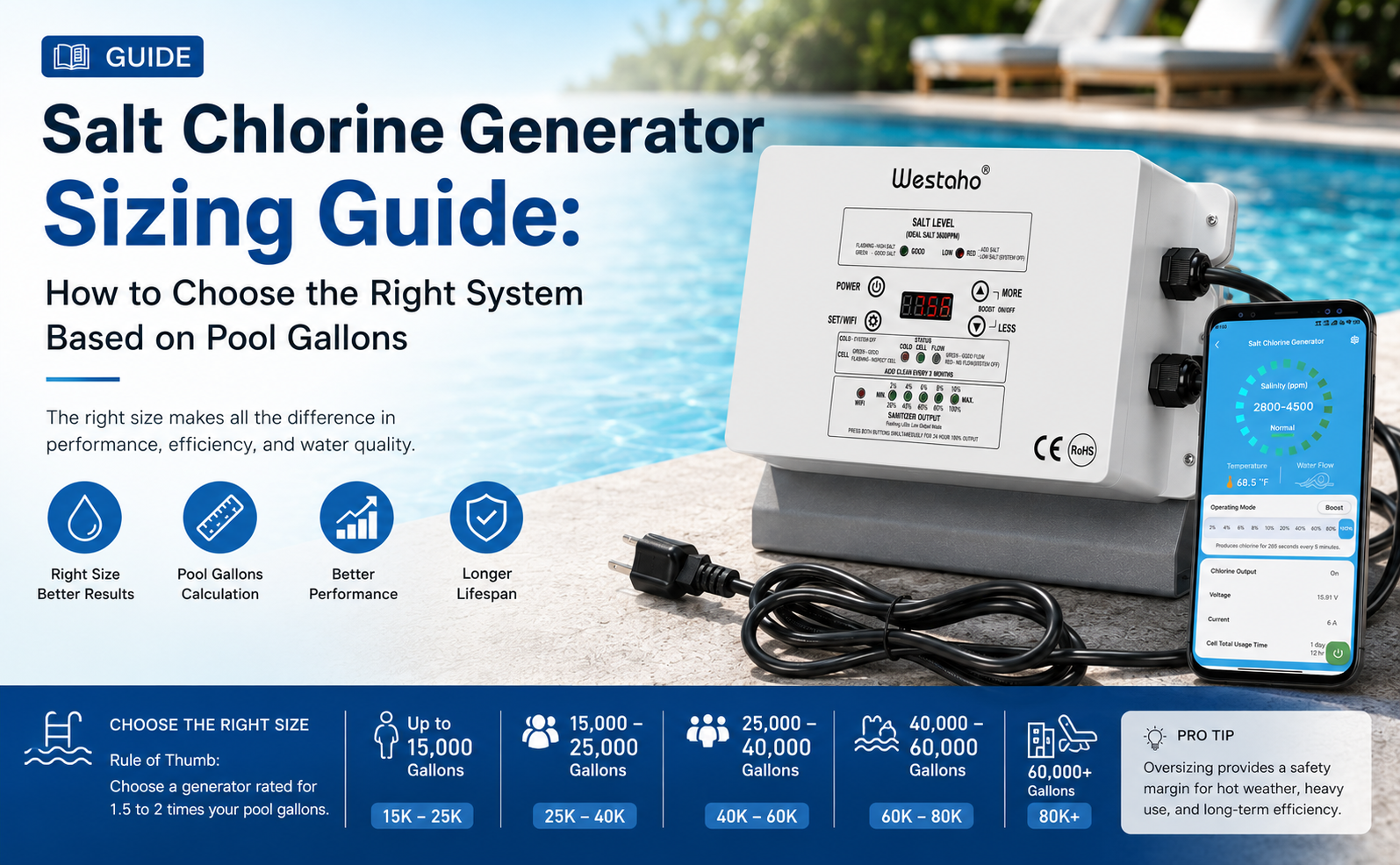
5.1 25,000 Gallon Model — Best Entry-Level System
This model is designed for small to medium inground pools.
Ideal for:
- Pools up to ~25,000 gallons
- First-time saltwater pool users
- Budget-conscious homeowners
- Simple backyard pools
Key benefits:
- Stable chlorine production
- Lower upfront cost
- Easy installation
- Efficient energy use
- No unnecessary oversized capacity
Core idea:
You only pay for the capacity you actually need.
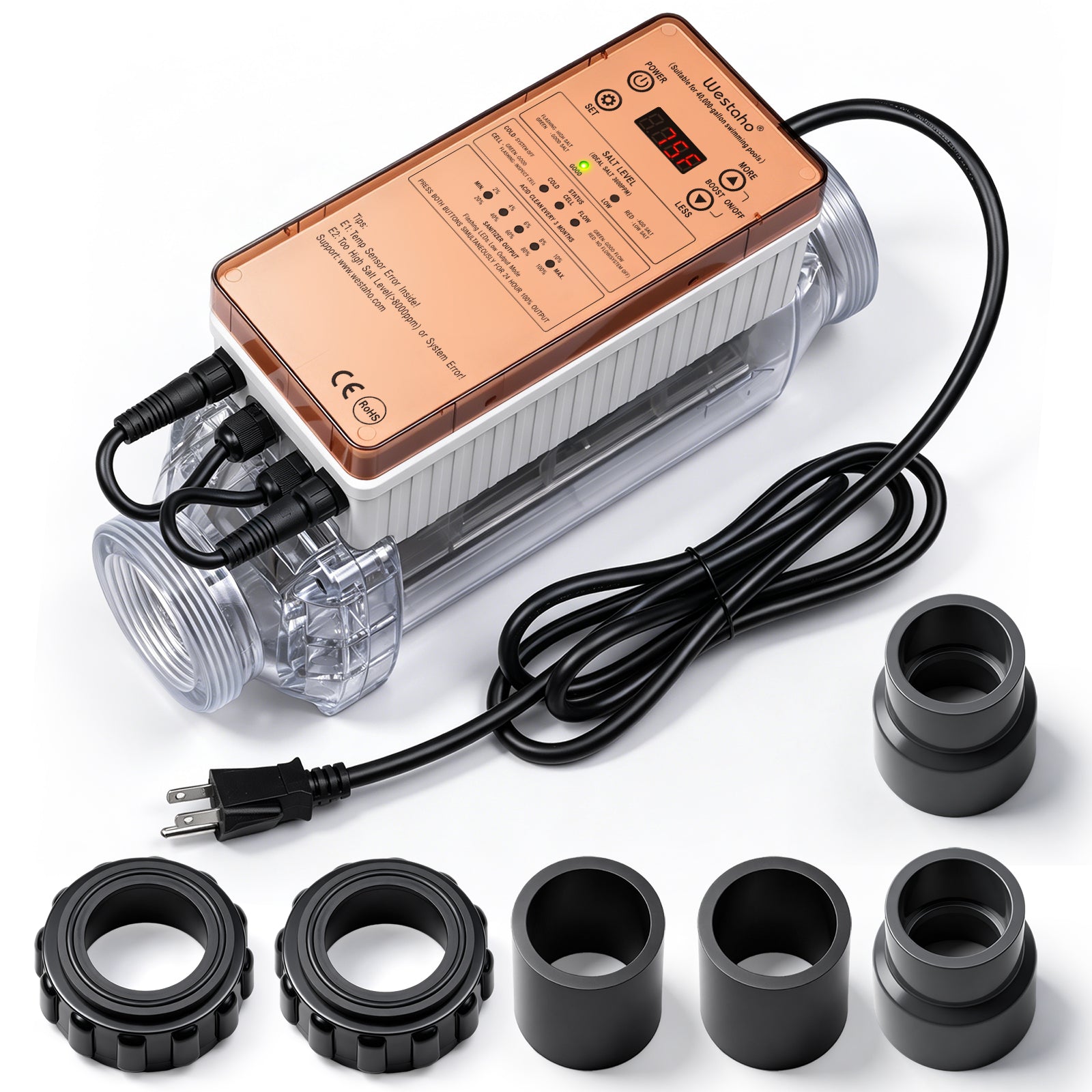
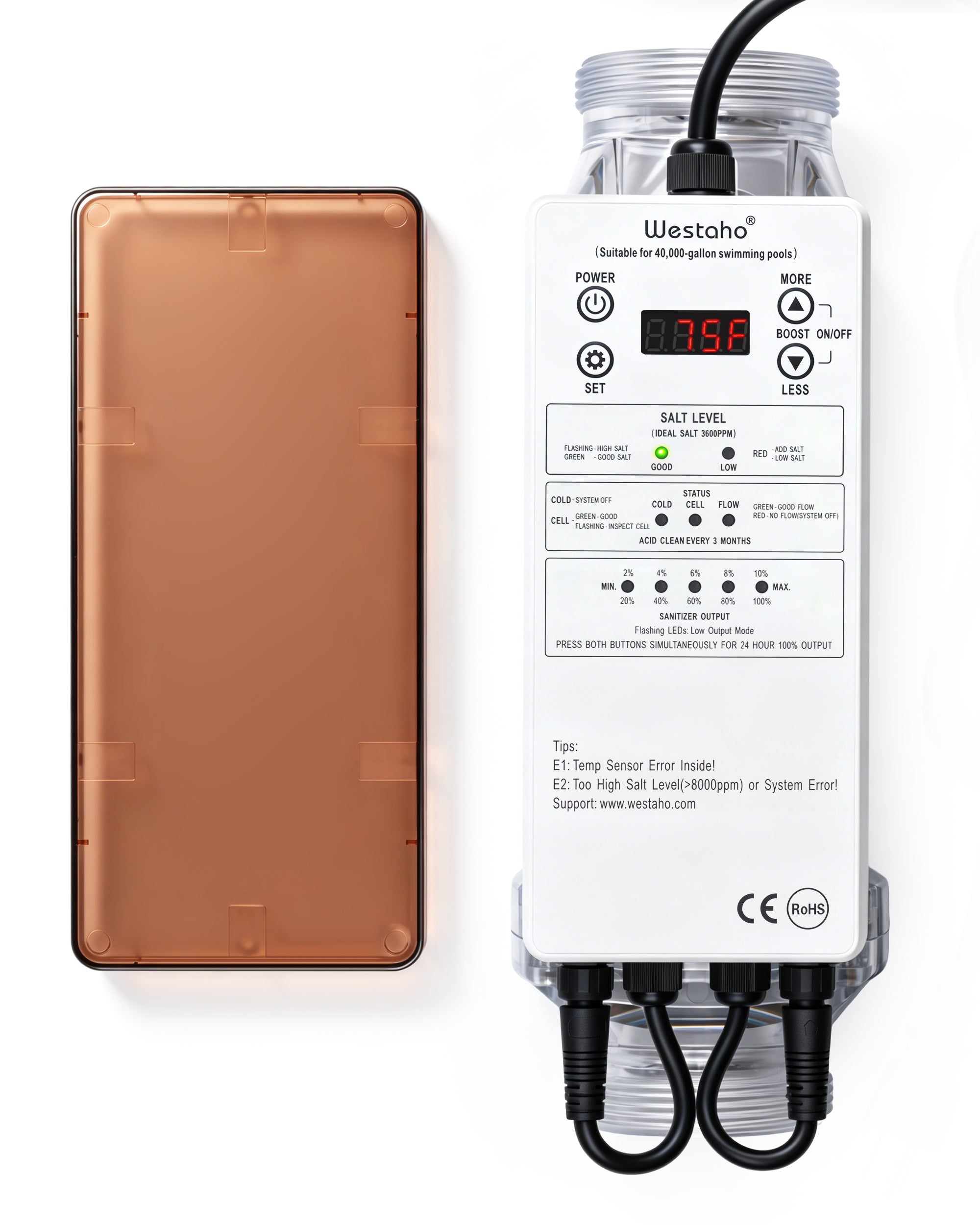
5.2 40,000 Gallon Model — High Output Performance System
This model is designed for larger residential pools or high-demand environments.
Ideal for:
- Large inground pools
- High swimmer usage
- Hot climates with strong chlorine demand
- Pools exposed to heavy sunlight
Key benefits:
- Higher chlorine output capacity
- Better performance during peak summer
- More system headroom
- Increased stability under load
Core idea:
Built for performance margin and reliability in larger pools.
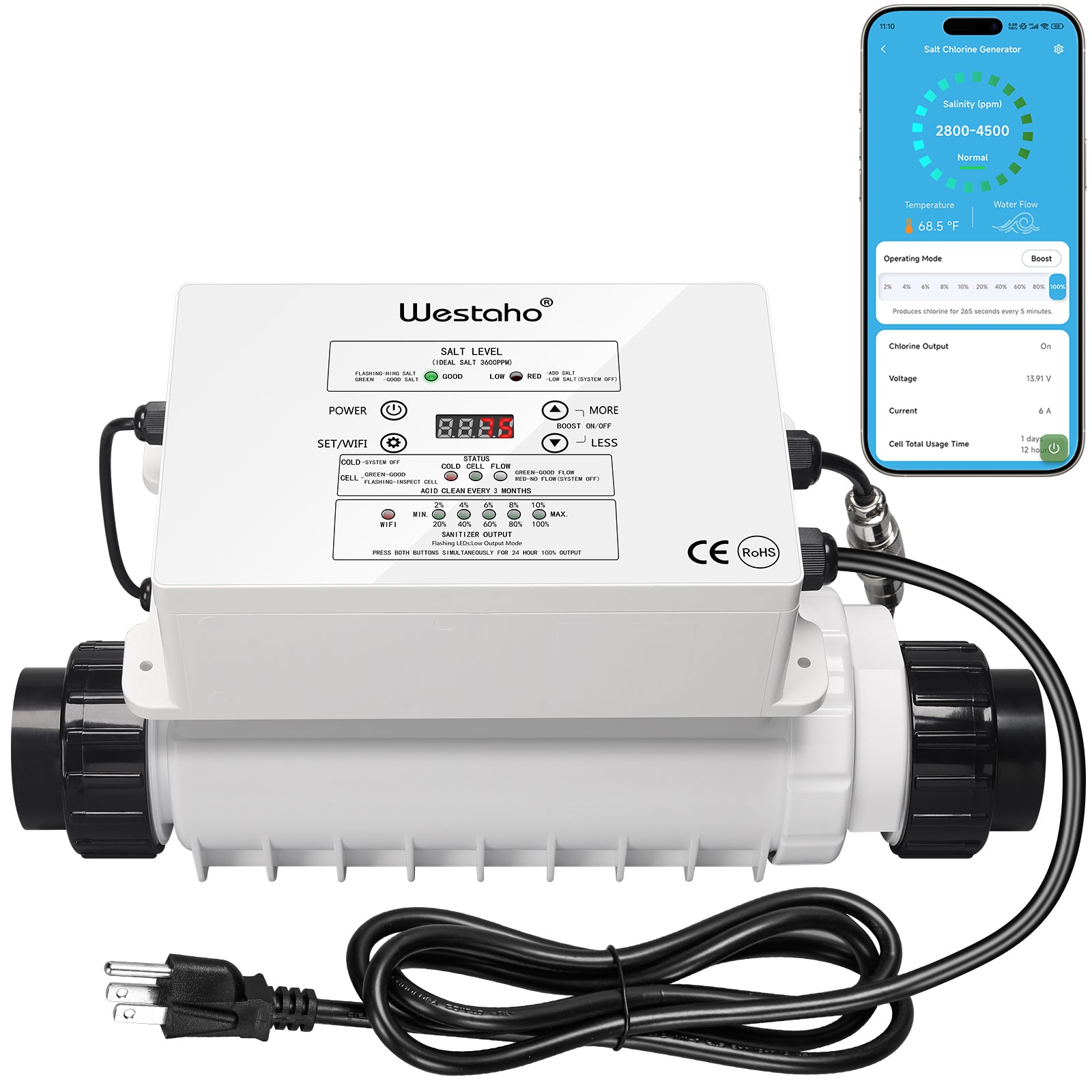
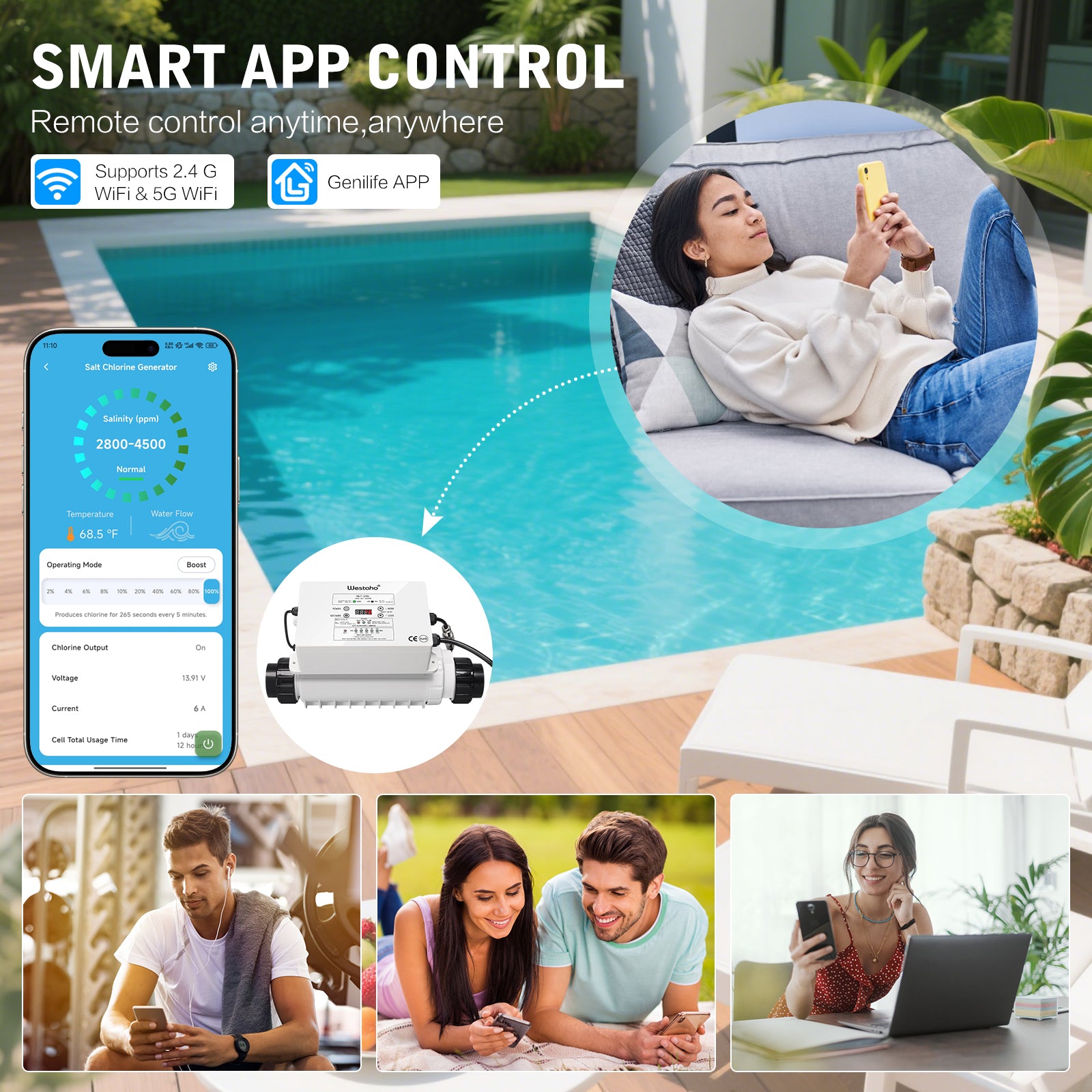
5.3 WiFi Smart Model — Full Remote Control Experience
This is Westaho’s most advanced system.
Ideal for:
- Smart home users
- Busy families
- Convenience-focused homeowners
- Remote pool monitoring
Key benefits:
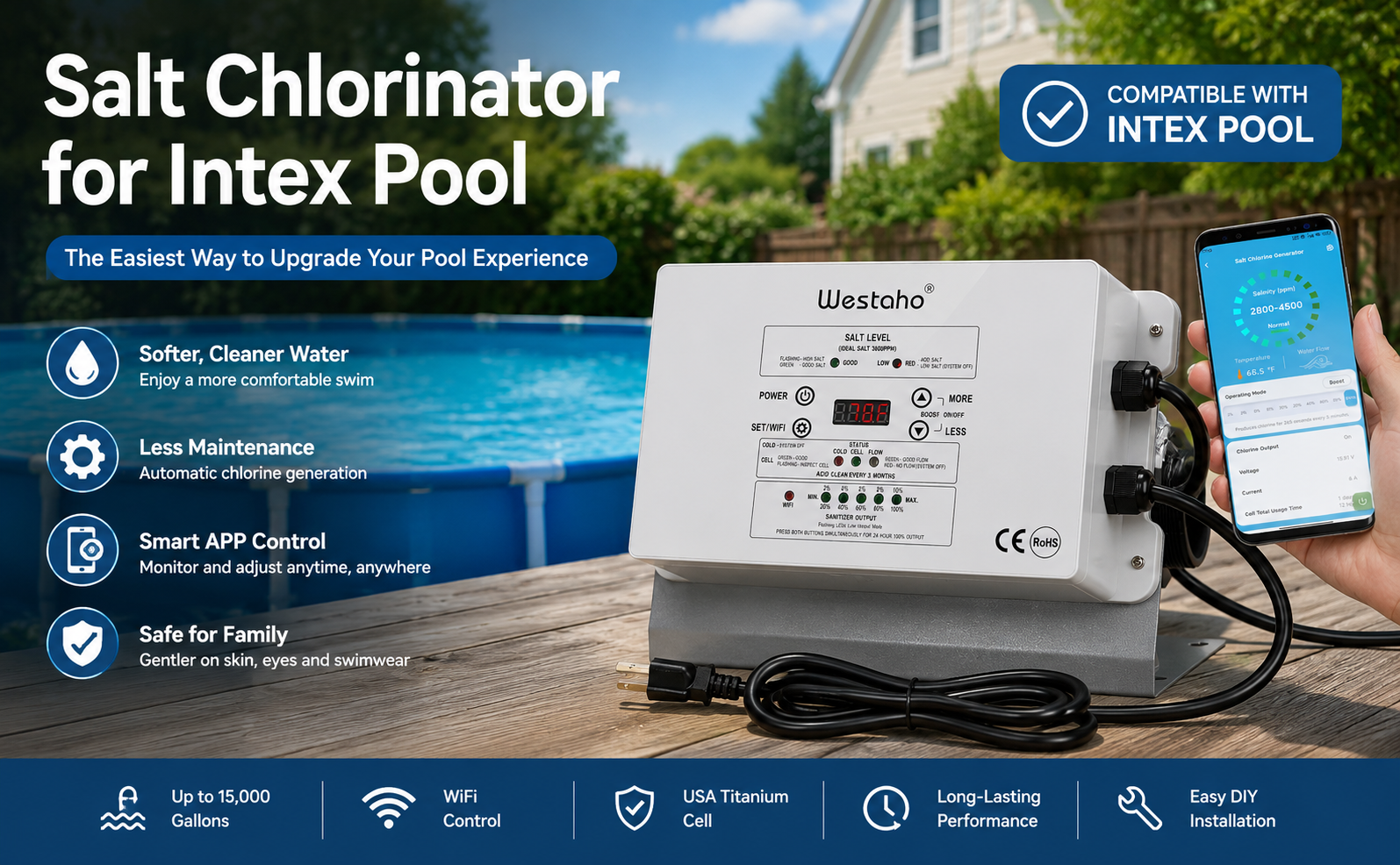
- APP-based control system
- Real-time monitoring
- Remote chlorine adjustment
- No external automation hub required
Core idea:
Your phone becomes your pool control center.
6. Westaho vs Pentair vs Hayward vs CircuPool
To understand real market positioning, we need to compare major brands directly.
6.1 Market Positioning Overview
| Brand | Positioning | Target User | Price Level |
|---|---|---|---|
| Westaho | Residential smart value system | Everyday homeowners | $ |
| Pentair | Full automation ecosystem | Luxury pool systems | $$$ |
| Hayward | Premium dealer-installed systems | High-end pools | $$$ |
| CircuPool | Performance DIY systems | Experienced owners | $$–$$$ |
6.2 Pentair
Pentair focuses on full ecosystem integration:
- Pool pumps + heaters + lighting + chlorination
- Advanced automation systems
- Dealer-installed setups
- High upfront investment
Best for luxury, fully automated pools—but expensive and complex.
6.3 Hayward
Hayward is a major legacy brand:
- Strong dealer network
-
Premium inground pool systems
-
High reliability reputation
- Professional installation often required
However, pricing reflects brand and distribution costs.
6.4 CircuPool
CircuPool is popular among DIY users:
- Strong performance reputation
- Long-lasting titanium cells
- Mid-to-high pricing
- Less ecosystem dependency
Good balance, but still closer to premium pricing than entry-level.
6.5 Westaho
Westaho focuses on:
- Simple residential systems
- APP control included
- Direct-to-consumer pricing
- Easy installation
- Right-sized pool capacity
Instead of building complexity, Westaho focuses on usability and affordability.
7. The Hidden Truth About Pricing
Here is what most manufacturers will not clearly tell you:
A $3,000 system does not automatically produce better chlorine than a $700 system.
What actually matters is:
- Correct system sizing
- Proper water chemistry
- Quality of titanium cell
- Consistent daily operation
Not brand pricing tiers.
8. Total Cost of Ownership Matters More Than Sticker Price
When comparing systems, homeowners should consider:
- Initial purchase price
- Installation cost
- Maintenance cost
- Replacement parts
- Energy consumption
- Add-on automation modules
A “cheaper” system with fewer add-ons often results in:
Lower total cost over 5–10 years
9. How to Choose the Right Westaho Model
Choosing the right system is simple when you focus on pool size and lifestyle.
Choose 25K if:
- Your pool is small to medium
- You want the lowest cost entry point
- You prefer simple installation
👉 Best for first-time saltwater users

Choose 40K if:
- You have a larger inground pool
- You need stronger chlorine output
- You want stability in hot climates
👉 Best for performance-focused homeowners

Choose WiFi if:
- You want smartphone control
- You want remote monitoring
- You value convenience and automation
👉 Best for modern smart-home pool owners

Final Conclusion
The difference between a $700 and a $3,000 salt chlorine generator is not about water quality—it is about system design philosophy.
High-end systems focus on:
- Ecosystems
- Dealer networks
- Automation complexity
- Oversized capacity
Westaho focuses on:
- Residential simplicity
- Smart APP control
- Efficient chlorine generation
- Affordable ownership
- Easy installation
At the end of the day, the best system is not the most expensive one.
It is the one that fits your pool, your lifestyle, and your budget.


Leave a comment
This site is protected by hCaptcha and the hCaptcha Privacy Policy and Terms of Service apply.